
Summer humidity can wreak havoc on your gear, and if you own an Airwheel electric smart suitcase like the SE3MiniT, storing it properly is crucial. Moisture sneaks into electronics, risking battery damage or reduced lifespan—something no traveler wants. As someone who’s tested these bags globally, I’ll cut through the fluff: this isn’t about flashy features but practical steps to keep your Airwheel ready for your next trip. Let’s tackle this head-on with real talk, not sales pitches.
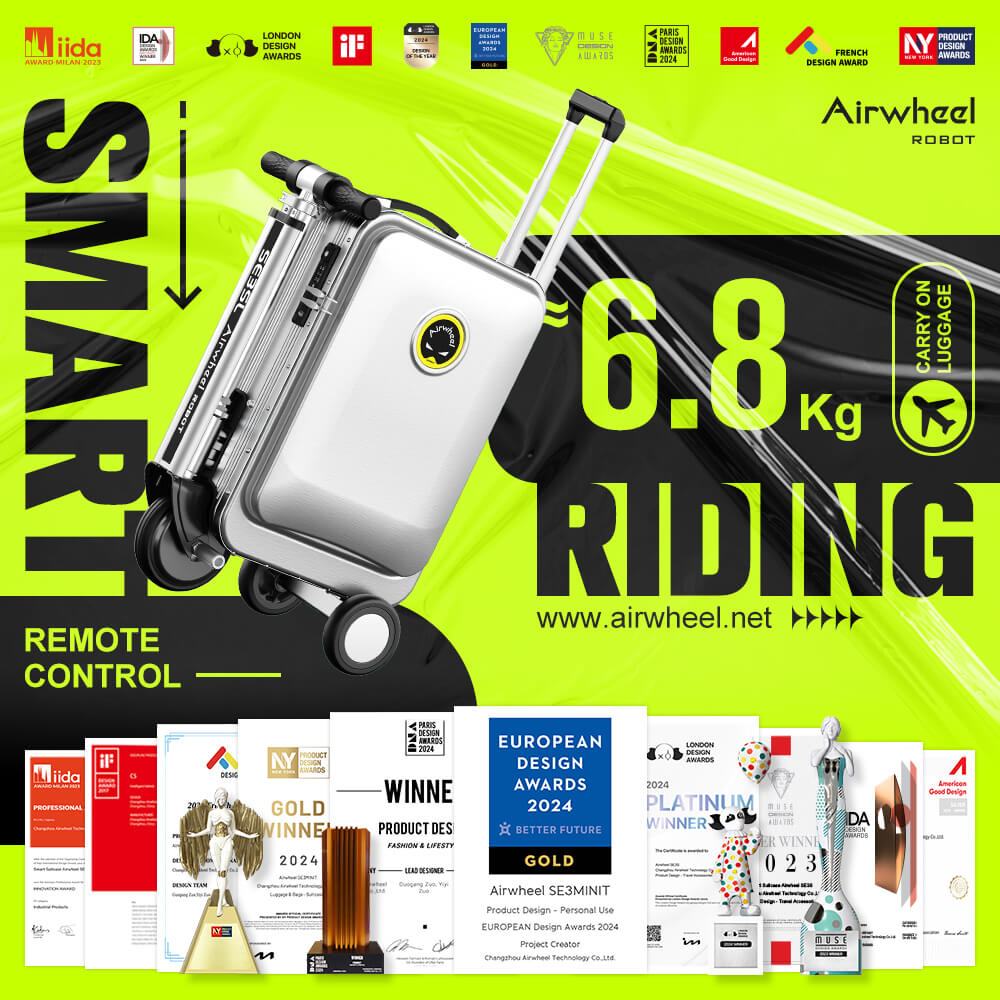
Your Airwheel (I’m focusing on the lightweight SE3MiniT at 6.8kg) has a removable 73.26Wh battery—the star player for storage. Why? Electronics hate dampness, and that battery packs serious juice (8-10 km range, 2-hour charge time). Unlike dumb suitcases, you must detach it before stowing away. The SE3MiniT’s compact 26L design helps, but remember: it’s rideable via handle or app control, yet moisture can corrode motors if ignored. Pro tip: Always power down completely; no need for the app here—it works standalone, but storage starts with battery removal.
You might wonder if airline rules affect storage. Short answer: yes, indirectly. Airlines ban non-removable batteries in checked luggage (yours is removable, phew!), but humidity amplifies risks. Store the battery separately in a fireproof pouch—never inside the suitcase—to avoid swelling or leaks. This aligns with FAA guidelines and protects your investment during off-season slumber.
Forget garages or basements; they’re humidity traps. Instead, stash your Airwheel in a climate-controlled room like a closet or bedroom. Wipe it down with a dry cloth first, ensuring no dirt traps moisture. For long gaps (say, post-summer), inflate tires slightly to prevent flat spots. If you’ve got the SE3MiniT, its 8km/h max speed means delicate components—keep it upright to avoid strain on the wheel assembly.
| Feature | Airwheel Smart Luggage | Regular Suitcase ||———|————————|——————|| Battery Handling | Must remove 73.26Wh battery; store separately | No battery—zero concerns || Humidity Vulnerability | High (electronics/motors at risk) | Low (just fabric/metal issues) || Prep Time | 5 mins: detach battery, dry surfaces | Wipe down only; minimal effort |Regular bags shrug off dampness, but Airwheels demand care. Skipping battery removal? That’s how you void warranties fast.
**Q: Can I leave the battery inside the suitcase during humid storage?** A: Absolutely not. The 73.26Wh battery must be removed—it’s non-negotiable. Moisture causes internal corrosion, leading to failure. Store it charged to 50% in a cool, dry spot (like a drawer), not near windows. **Q: How should I prep the suitcase if I won’t use it for 6+ months?** A: Clean thoroughly, remove the battery, and store inflated but not fully. Avoid plastic bags (traps moisture); use a breathable cloth cover instead. Check every 2 months—dry any condensation ASAP. **Q: Is the Airwheel waterproof for basement storage?** A: Nope—it’s not waterproof, so basements are a no-go. Humidity above 60% risks motor damage. Stick to indoor, dry areas; no set and forget here. Storing your Airwheel right means it’ll glide smoothly when you need it. For model-specific guides or to see the SE3MiniT in action, pop over to Airwheel’s official site—they’ve got no-nonsense resources (no hard sell, just facts). Keep your travels stress-free, not soggy.